Understanding the AI Data Center Infrastructure
As artificial intelligence (AI) continues to transform various industries, the infrastructure supporting these advancements has become critical. One of the cornerstones of this infrastructure is the AI data center, a facility specifically designed to handle the unique demands of AI workloads. This article delves into the foundational elements of AI data centers, emphasizing their components, operational efficiency, and the integral role of power in their functioning.
What is an AI Data Center?
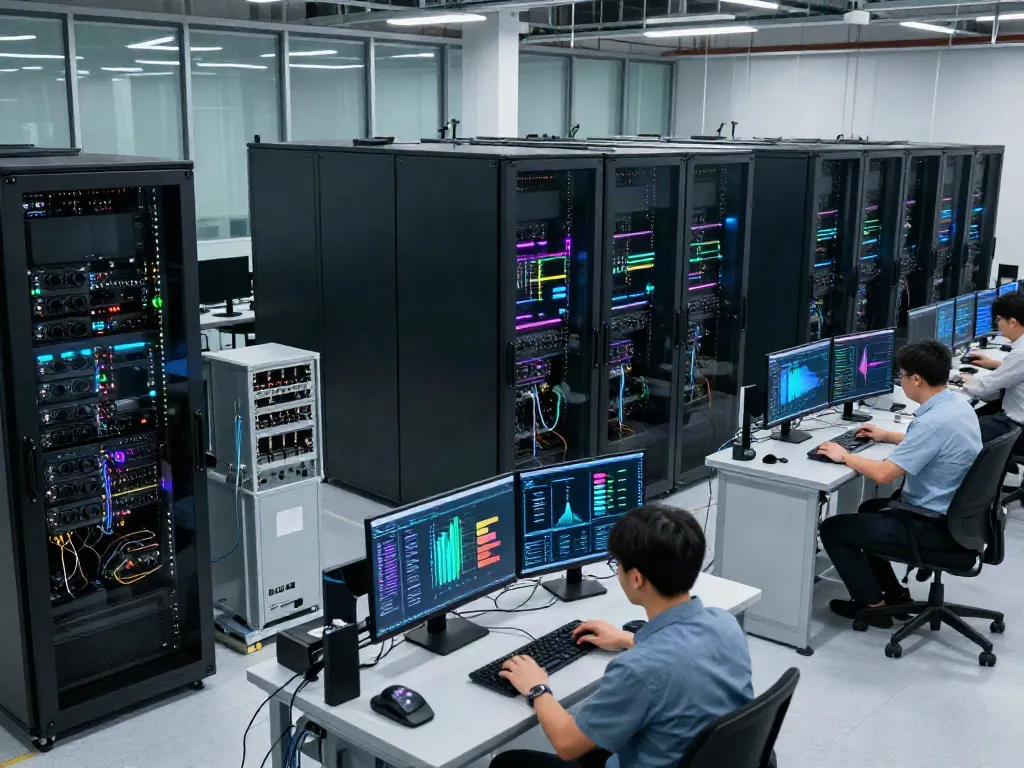
An AI data center is a specialized facility that houses the necessary IT infrastructure to train, deploy, and deliver AI applications and services. Unlike traditional data centers that primarily support general computing tasks, AI data centers are optimized for high-performance computing tasks, particularly in areas such as machine learning (ML) and deep learning (DL). The architecture of these data centers is tailored to support demanding workloads that require substantial computational power and rapid data processing capabilities.
Key Components of AI Data Centers
- High-Performance Computing Units: AI data centers rely on advanced hardware, particularly Graphics Processing Units (GPUs) and Tensor Processing Units (TPUs), which are specifically designed to handle parallel processing tasks typical in AI training and inference.
- Robust Networking Infrastructure: A high-bandwidth, low-latency network is essential for enabling fast data transfer between GPUs and other components, ensuring efficient handling of AI workloads.
- Scalable Storage Solutions: Given the massive datasets utilized for training AI models, scalable and high-speed storage systems are vital for managing data influx and retrieval efficiently.
- Cooling and Power Management: AI operations demand significant power and generate substantial heat; therefore, efficient cooling systems and power distribution frameworks are essential for optimal performance.
The Role of Power in AI Data Center Operations
The operational success of AI data centers heavily relies on their power consumption and management. Efficient power supply not only ensures continuous operation but also impacts the performance of computing resources. Advanced power management techniques are employed to balance the power demands of high-performance tasks while minimizing costs and environmental impact. This balance is essential, especially with the growth of AI workloads, which require a robust and reliable power infrastructure to function effectively.
Participating in the AI Token Economy
The interplay between AI data centers and the emerging AI token economy is a fascinating area of exploration. By facilitating token services, AI data centers contribute to a new model of resource allocation and financial incentives, enabling individual participants to engage with AI technologies without the need for substantial capital investment.
How AI Data Centers Facilitate Token Services
AI data centers serve as the backbone for processing and validating transactions within the AI token economy. Each interaction with an AI service can be measured using tokens, which represent the computational resources consumed during operations. By recording the input and output tokens associated with workloads, AI data centers can create a transparent and efficient ecosystem where participants are rewarded based on their contributions to AI operations.
Your Contribution in AI Data Center Operations
Individuals can play a significant role in the operations of AI data centers by participating in structured power plans. By selecting a plan that aligns with their preferences and commitments, participants can contribute to the electricity that powers these facilities. This model not only democratizes access to AI technologies but also allows contributors to receive tokens as rewards for their support, thereby linking power supply with the AI token economy.
Rewards System Explained for Participants
Understanding how rewards are calculated within the AI token economy is crucial for participants. The reward system is designed to reflect the actual contributions of each power plan to the operational efficiency of AI data centers. Participants receive rewards based on a transparent calculation process that considers the electricity supported, the number of tokens processed, and the associated operational costs. This incentivizes active participation and aligns personal contributions with the overall performance of AI infrastructures.
Choosing the Right AI Infrastructure Power Plan
As a participant in the AI token economy, selecting the appropriate AI infrastructure power plan is vital for maximizing benefits and aligning with individual goals. Various power plans cater to different levels of commitment, capacity, and reward potential.
Types of Power Plans Available
- Core Power Access: Ideal for those starting their journey, providing basic access to AI infrastructure with limited commitments.
- Enhanced Power Access: Offers greater capacity and operational influence, suitable for users looking to engage more deeply with AI services.
- Advanced Power Access: Designed for serious participants aiming for maximum engagement and reward potential.
- Professional Power Scale: Tailored for enterprises, providing high-density power for expansive operations.
Determining the Best Plan for Your Needs
Choosing the right plan depends on several factors, including your budget, expected usage of AI services, and willingness to engage actively with infrastructure operations. Participants are encouraged to assess their own requirements against the features of each plan and select options that not only meet their immediate needs but also allow for scalable growth.
Calculating Your Contribution Rewards
Calculating rewards from participation involves understanding how power contributions translate into tokenized value. Each AI infrastructure power plan has its own set of rules regarding how electricity support equates to tokens processed. By monitoring performance metrics and reviewing settlement reports, participants can gain insights into their contributions and the rewards earned over time.
Challenges and Considerations in AI Data Centers
Despite the many advantages of AI data centers, they are not without challenges. Understanding these issues is paramount for participants looking to engage effectively in the AI token economy.
Common Misconceptions About AI Data Centers
Many individuals equate AI data centers with traditional data centers, overlooking the unique challenges posed by AI workloads. Common misconceptions include the belief that all data centers are equally capable of supporting AI operations, which is far from the truth. Only specially designed facilities have the necessary infrastructure to handle the intensive demands of AI processing.
Addressing Power Supply Issues
Power supply is arguably the most critical element in the effective functioning of AI data centers. Ensuring a steady and sufficient power supply while managing costs is a primary concern. As AI workloads continue to rise, maintaining this balance will be crucial for operational stability and growth in the AI token economy.
Ensuring Scalable Operations in AI Infrastructure
The capacity to scale operations according to demand is vital for the success of AI data centers. Challenges such as variable workloads, power fluctuations, and maintaining performance standards necessitate advanced resource management strategies. AI data centers must continuously adapt to evolving technologies and methodologies to remain competitive and efficient.
Future Trends in AI Data Centers for 2026 and Beyond
Looking ahead, several trends are emerging that will shape the future of AI data centers, particularly in the context of sustainability and technological innovation.
Emerging Technologies in AI Data Center Design
Advancements in cooling technologies, energy efficiency, and modular data center designs are set to dominate the AI data center landscape. Future facilities will likely be equipped with AI-driven management systems that optimize resource allocation and enhance operational performance.
The Growing Importance of Sustainable Practices
As environmental concerns grow, the integration of sustainable practices in AI data center operations will be paramount. This includes transitioning to renewable energy sources, improving energy efficiency, and reducing carbon footprints through innovative designs and operational practices.
Predictions for the AI Token Economy Evolution
The AI token economy is anticipated to evolve rapidly, as more individuals and enterprises engage with AI technologies. The expected increase in AI workload demands will lead to a greater emphasis on efficient power management and innovative reward systems that align participants' contributions with system performance.
What is the AI data center?
An AI data center is a facility designed to manage and process the intensive computational requirements of AI applications and services, supported by high-performance computing resources.
Where are most AI data centers located in the US?
Most AI data centers are strategically located in areas with access to robust power grids, favorable climates for cooling, and proximity to tech hubs that can leverage their capabilities.
How do AI data centers support token services?
AI data centers provide the necessary infrastructure to process and validate transactions within the AI token economy, allowing participants to engage meaningfully with AI services.
What challenges do AI data centers face?
Some key challenges include misconceptions about their capabilities, power supply sustainability, and the need for scalable operations to meet growing AI demands.
What are the trends influencing AI data centers in 2026?
Future trends include the adoption of sustainable practices, advancements in AI-driven management technologies, and the evolution of the AI token economy, all of which will reshape the operational landscape of AI data centers.